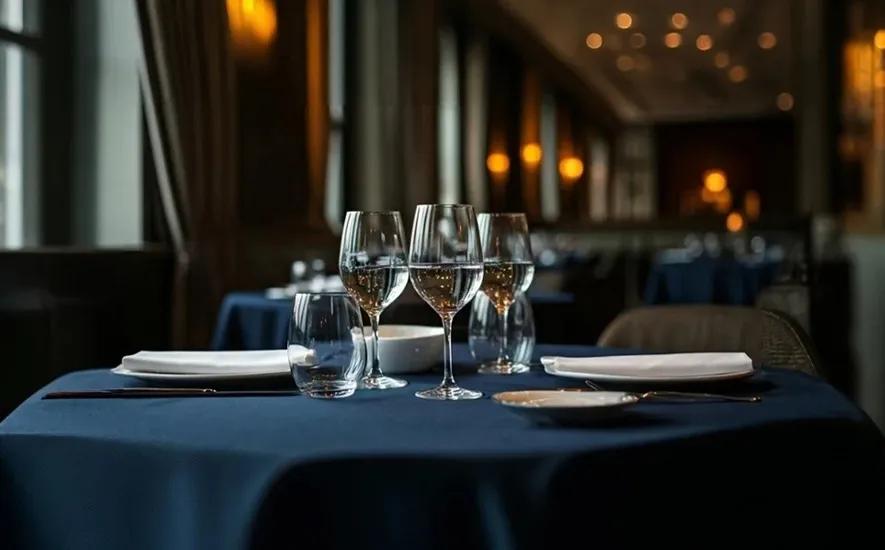
The first pour is no longer a polite formality. In foodservice, it is a pairing cue, a margin lever and a test of dining-room intelligence.
Some of the strongest upsells begin quietly. It starts with a small table question: “Would you prefer still or sparkling water?”
Water appears on almost every table, yet it remains one of the least understood tools in F&B. Too often, the opening water question is asked out of habit, without connecting the choice to the menu, the guest or the occasion. That is the missed opportunity: water is not just a first pour, but an early chance to guide the experience, support the food and shape perceived value.
According to Global Market Insights, the premium bottled water market is expected to reach USD 78.8 billion by 2035, driven by demand for glass packaging and elevated presentation. The insight is clear: guests are buying provenance, wellness and occasion. Operators who treat this category as a routine purchase are already falling behind.
Plain water is often seen as the cautious choice because it feels gentler, but its true value is in how quietly it supports the meal.
A composed pour works best when the plate should remain the focus. Think crudo, oysters, steamed fish, fresh cheeses, light broths, sushi and fruit-led desserts, where gentler mineral profiles allow delicate flavours to come through clearly. Non-carbonated water is not tied to one occasion; it belongs across channels, menus and dining formats.
A server can say, “For the lighter courses, I would keep the table on a softer mineral profile so the seafood stays clear.” That is hospitality with a point of view.
On the other hand, the carbonated option with bubbles earns its place when the plate has fat, salt, smoke or richness. Carbonation refreshes the palate between bites and makes heavier food feel more balanced. Fried calamari, grilled prawns, shawarma platters, burrata, creamy pasta and lamb chops all benefit from that lift.
The mistake is presenting bubbles as a premium signal, when the real value is function. Carbonation refreshes the palate, balances richer dishes. “For the grilled meat, I would recommend the sparkling. It keeps the palate sharp,” is stronger than, “Would you like our premium option?” One clear sentence changes the ask from an add-on to a recommendation.
A good bottle can be ruined by careless handling. A cheaper one can feel considered if the table ritual is precise.
The label should face the guest. Opening should be quiet. Pouring should stop before the glass feels too full. Carbonated bottles should be cold enough to feel fresh but poured slowly enough to preserve the bead. Still bottles should not be treated as filler. In fine dining, ice should be offered with discretion, not assumed. In banqueting, replenishment should be timed before glasses sit empty.
Table service is where the value starts to feel justified. If the server drops a bottle and disappears, the guest sees a cost. If the ritual is controlled, the guest sees care.
Bottled water has no bartender, garnish or glassware drama to hide behind. Its occasion must come from selection, temperature, pour and timing. Yves Asmar, Beverage Category Manager at Chef Middle East, stated, “Bottled water is an important part of the dining experience and should be selected with the same care as wine, coffee, or other premium beverages.”
Water pairing cannot work when procurement offers only the cheapest safe product. Water is not a basic stock item, and treating it like one weakens the dining experience before the bottle reaches the guest.
For operators, that means looking beyond price and format. Mineral composition, taste profile, presentation, sustainability credentials and menu compatibility should all guide the decision. As he adds, “water should enhance rather than compete with food and beverages.”
Chef Middle East’s bottled water range offers three clear propositions, available across the UAE, Qatar and Oman: Antipodes for premium dining, Surgiva for versatility and Norwegian Water for sustainable portability.
Antipodes is the premium choice. Sourced from a deep aquifer in New Zealand, it is naturally pure, exceptionally low in mineral content and has a clean, neutral taste profile that allows food and wine to shine. Its elegant glass packaging and strong sustainability credentials make it a strong fit for luxury hotels, fine-dining restaurants and Michelin-level dining rooms. Asmar describes Antipodes as a premium dining cue that adds refinement to the guest experience.
Surgiva is the versatile choice. Originating from the Italian Alps, it has exceptionally low mineral content and a refined taste profile designed to accompany gastronomy and premium wine. Its role is broader: it works across luxury hotels, upscale restaurants, corporate dining environments, beach clubs and wider hospitality settings where operators need quality, consistency and flexibility without making the water feel overly formal.
Norwegian Water is the sustainable, practical choice. Its Mineral Water Tetrapack format gives operators a portable option for catering, events, grab-and-go, room service and other high-mobility occasions. The format also reduces plastic usage, lowers transportation impact and gives restaurants a visible sustainability initiative that guests can immediately understand.
The real measure is suitability. The chosen water should sit comfortably within the restaurant’s concept, support the menu and reflect the standard guests expect from the brand. When chosen with the right intent, water becomes one of the ways a venue expresses the standard of quality.
The next advantage will not come from asking guests about their water preference faster. It will come from asking it better.
The best restaurants do not simply stock expensive bottles and hope guests feel impressed. They understand when a gentle mineral profile should let the food lead, when bubbles should refresh the meal, and when the right wording can make the choice feel intentional.
Water now carries more weight than its place on the bill suggests. A thoughtless first pour weakens the experience before the food has a chance to speak.
In a market where diners notice details quickly, the first glass can either set a tone of precision or expose a lack of it. For operators, that makes water presentation less of a routine and more of a discipline. Only those who give the water ritual purpose can turn the first pour into a meaningful moment; the rest simply move stock from storage to table.