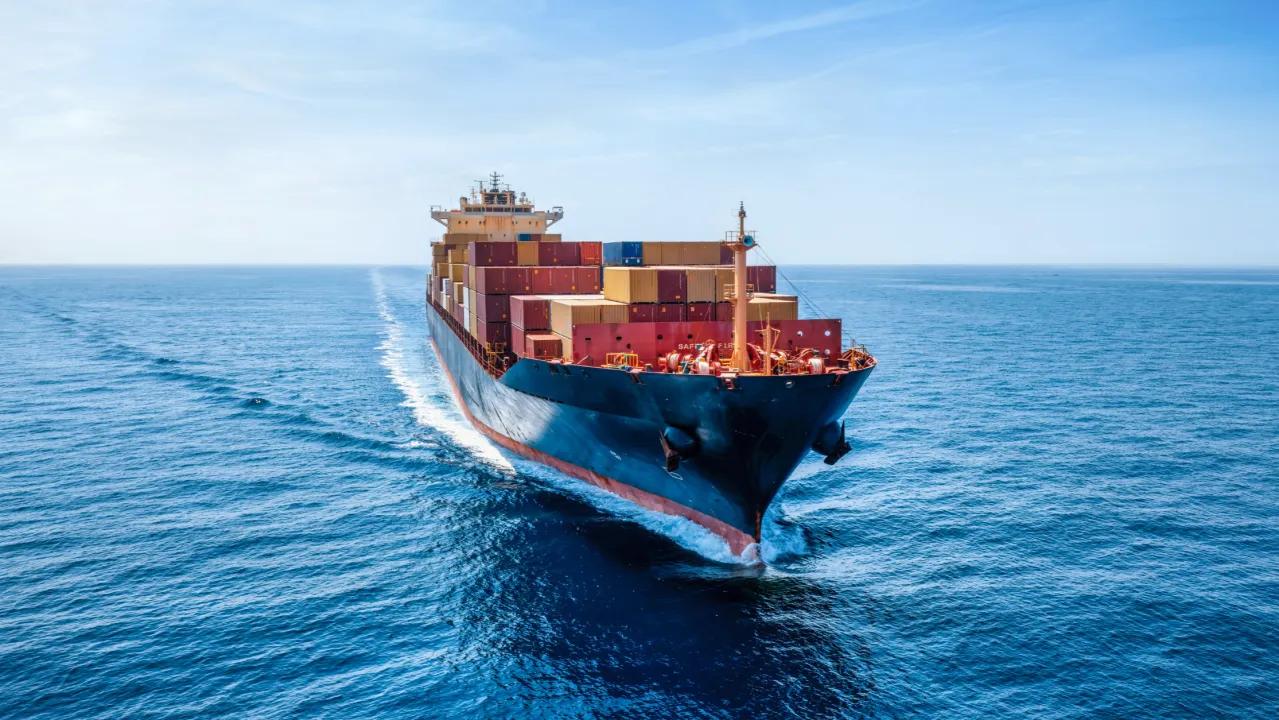
The supply chain serving foodservice across the UAE, Qatar, and Oman is under real pressure. The kind that shows up in order confirmations, lead times, and increasingly, cost lines.
Even as the situation evolves, the cost impact and operational disruption continue to linger. This is our honest assessment of where things stand, and our practical guidance for what to do next.
The Ground Reality
Chef Middle East has been at the center of this disruption since it began. Our operations team is rebuilding parts of the supply chain in real time, container by container, day by day. Green corridors are beginning to ease the complexity and time involved in cross-border transit, which is a welcome development. However, their impact on cost is limited, savings come only through the swifter resolution of individual containers, rather than any structural reduction in the charges operators are facing.
Per Ankersen, Head of Procurement at Chef Middle East, has been with the business for close to a decade, moving through roles spanning commercial, general management, and strategic operations. Few people in the region carry a more grounded view of how foodservice supply chains actually work. His assessment is unambiguous: "This is the most significant procedural disruption I can recall in the region."
In practice, that means destination changes, document amendments, new clearance partners, port capacity constraints, and transport limitations. All of these compounds under time pressure that starts well before cargo reaches the GCC.
The impact is broadly consistent across the UAE, Qatar, and Oman. Limited access to usual ports is driving additional cost and complexity for everyone. No distributor in this region is unaffected, and there is no fixed playbook. You find a solution, conditions shift, and you adapt again. Looking ahead, even as conditions begin to stabilise, we are expecting an extended period of sea-route and cargo repositioning before costs and service levels realign closer to previous levels. The effects on supply chains outlast the disruption itself as recovery will take time.
Where Cost Increases Are Coming From
Before the disruption, shipments moved directly to destination. Often to the city where the product was needed. That direct routing was the most efficient and cost-effective option available. It no longer exists in the same way.
Per Ankersen explains what that means in practice: "In many cases, shipping lines exercise 'end of voyage,' off-loading at the next safe port of their choice. From that point, we must arrange and fund the onward movement as the consignee."
Today, that means cargo discharged at Khor Fakkan, Salalah, or Jeddah — sometimes far from operations, with all onward costs falling to us as the consignee.
The cost layers multiply quickly:
We have already seen price differences of over 35% between providers for the identical service. This reflects how sharply supply and demand conditions have shifted across the region.
Beyond transport, we have had to find new insurance solutions entirely. Per Ankersen states that: "We are adding quite heavy insurance costs to our own business, which we're not passing on to our customers. That's the only way we can get the product on a ship or on an airplane." We are carrying the liability so our customers do not have to.
We are actively challenging costs, comparing options, and negotiating wherever possible to protect our customers. The costs are real, they are unavoidable in the current environment, and they are a factor your procurement team needs to account for.
What This Means for Your Decisions
Across our customer base, costs are hitting harder than availability right now. In-market stock levels have not yet become the primary pressure point. But availability will become a concern. Operators who prepare now will be in a materially stronger position than those who wait.
The decisions operators face are not uniform. Some cannot compromise on brand or specification. Others have more room to consider alternatives, whether on origin, format, or product range. Neither position is wrong. What matters is knowing which category applies to each product in your range, before the pressure intensifies.
Our advice is to work through this with a clear framework: know what is non-negotiable, commit to your key partnerships, and build in flexibility everywhere else.
Five Actions to Take Now
The operators navigating this most effectively are not waiting for certainty. They are acting on the best available information and adjusting as conditions change. If you have not already, we recommend the following:
What to Expect from Chef Middle East
The fundamentals of a strong supplier relationship have not changed: partnership, frequent communication, transparency, flexibility, and a solution-oriented mindset. What has changed is the pace at which decisions need to be made.
Per Ankersen notes that "Waiting for perfect certainty can be more disruptive than taking a well-judged, timely action." That principle guides how we operate right now.
Per Ankersen is direct about the commitment: "Because conditions evolve quickly, we are operating with a true 'all hands on deck' approach to protect continuity and stability for our customers, in line with our principle of putting clients first." Our procurement team has been redeployed to manage transit shipments and engage with new logistics partners, many of whom we had never worked with before. Per Ankersen highlights that "We have repurposed whole teams to support the supply chain element and the cost element of the supply chain changes to help create stability and sustainability for our customers." We are reviewing inventory levels daily, rebalancing stock, validating and challenging charges, and identifying practical solutions across every origin and product category.
What we can offer is transparency, speed, and a genuine commitment to finding workable solutions alongside our customers. That is what 30 years of serving over 4,500 operators across the region means in practice.
Act Now, Together
Teams adapting successfully will be the ones who engaged early, committed to strategic partnerships, built in flexibility where they could, and had the courage to ask hard questions and act on honest answers.
The priority now is staying aligned, acting quickly, and pursuing workable solutions that minimise delays. Conditions will keep shifting. What matters is that you are not navigating it alone.
If you have not yet reviewed your sourcing strategy in light of current conditions, now is the moment. Contact your Chef Middle East account team to work through your critical items, assess realistic lead times, and build a practical action plan together.
We are in this with you.
For sourcing strategy support, contact your Chef Middle East account manager.
Sign up here: Sign Up | Chef Middle East